Original music film · FLARE
HUMAN VERIFIED
A verification system loses its certainty. A performer finds daylight.
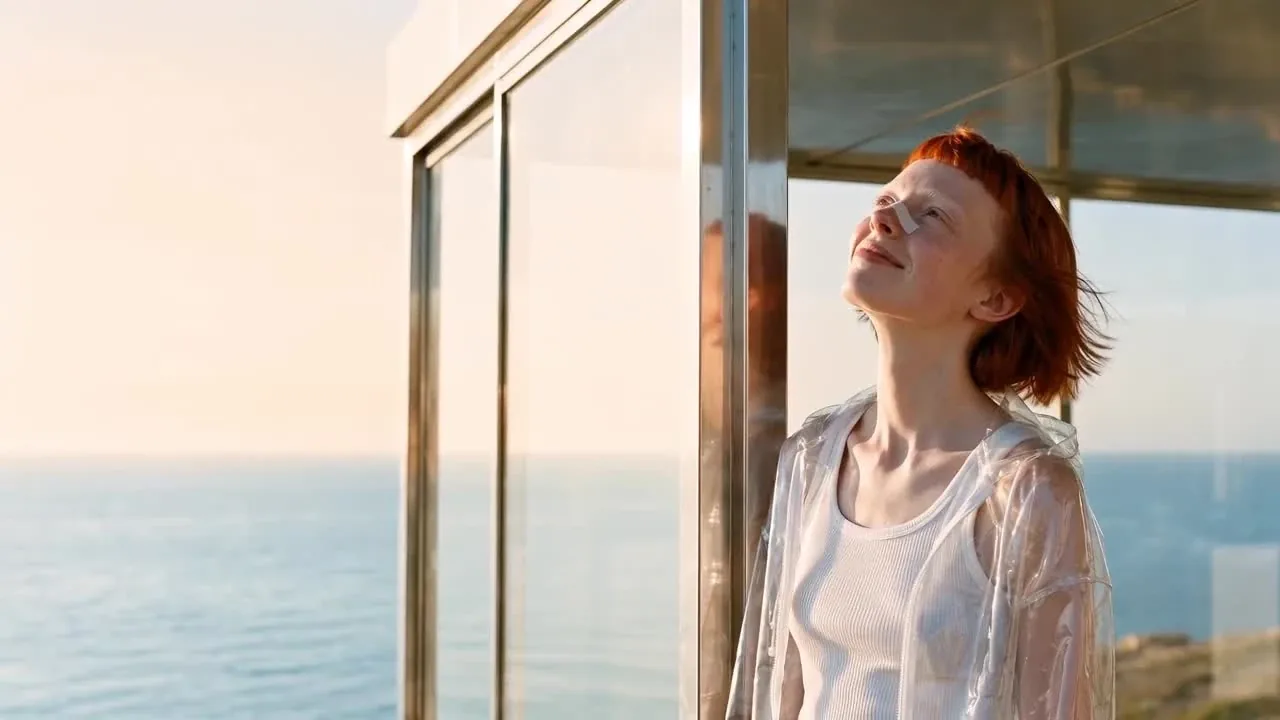
HUMAN VERIFIED is the first FLARE music film. It opens inside a controlled world of silver surfaces and diagnostic graphics, where a verification system is trying to classify her. When the film opens into coastal daylight, the classification stops working and what's left is a performance.
A full-length test
The film brings together what I'd been building in generative imagery, compositing, motion graphics and production tooling. At about four and a half minutes, it gave all of that a sustained test. The character, the visual language and the song had to hold together across a complete edit.
The script ties the song to the shots
The script puts the lyrics, performance direction, visual ideas and shot timing in one document. Shot IDs and film timecodes connect each passage to the production, and the scene directions describe how the verification system shows up around FLARE.
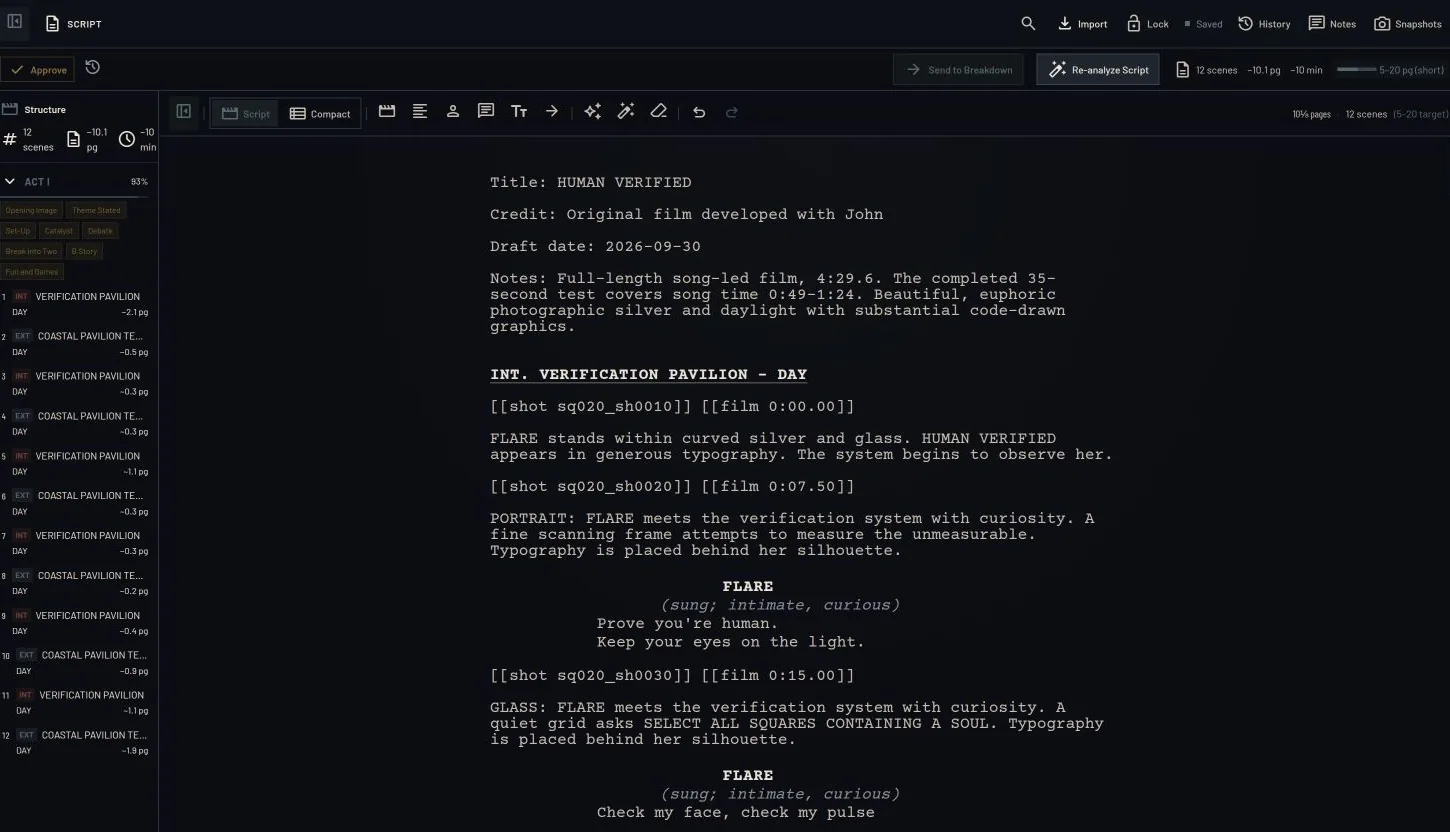
A world that changes with the song
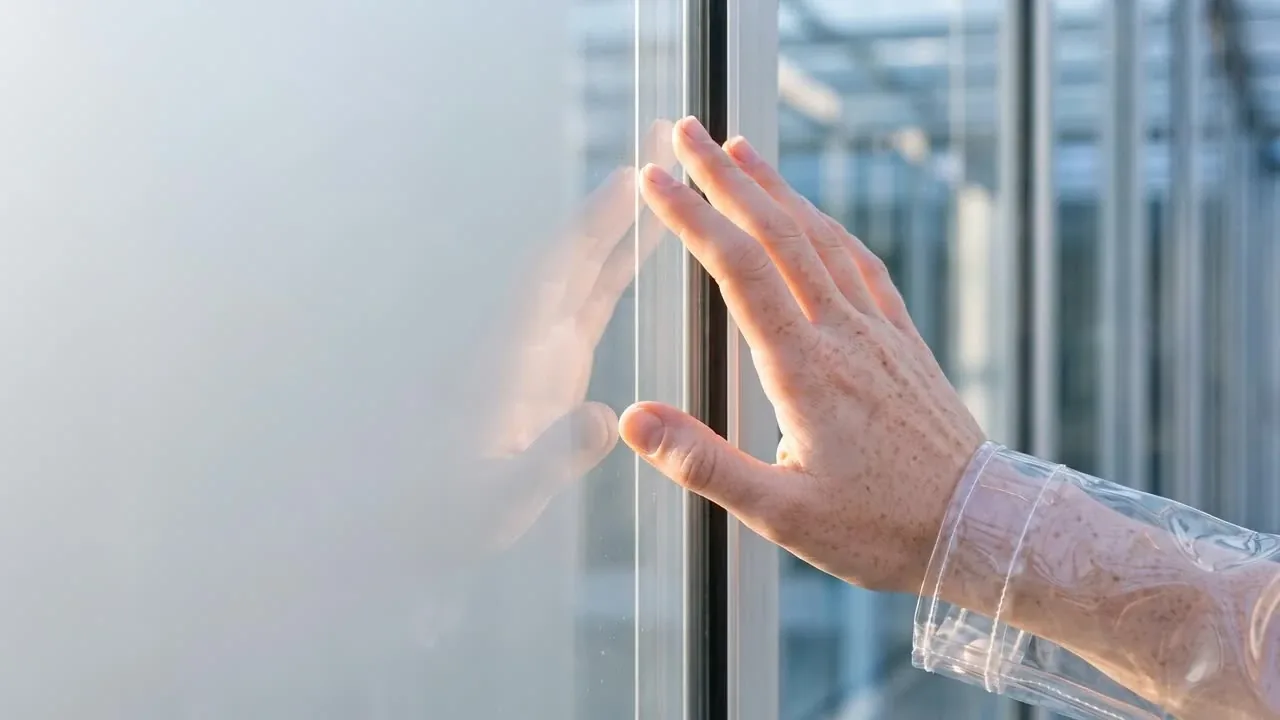
The look runs from photographic silver interiors to warm coastal light. FLARE's red hair and nose tape give the audience something to recognize as the framing and the environment change around her. Diagnostic markings, CAPTCHA grids and orbiting lines make the verification system visible.
Graphics that sit in the picture
The graphics carry part of the story, so how they relate to her matters as much as how they look. A line passing behind her has to feel like it's in the shot. A word arriving on a vocal has to feel like part of the performance. I work from generated footage, subject masks and a separate graphics layer, which lets me direct those relationships in the composite.
Built in the edit
The film started as an animatic of stills cut to the song with Remotion graphics on top. I could review pacing, composition and kinetic lyrics as a whole piece while pictures were still cheap to change. Then video takes replaced the stills one shot at a time, inside the same edit. A held composition becomes a moving performance, the take goes through review, and the graphics and timing get adjusted around it.
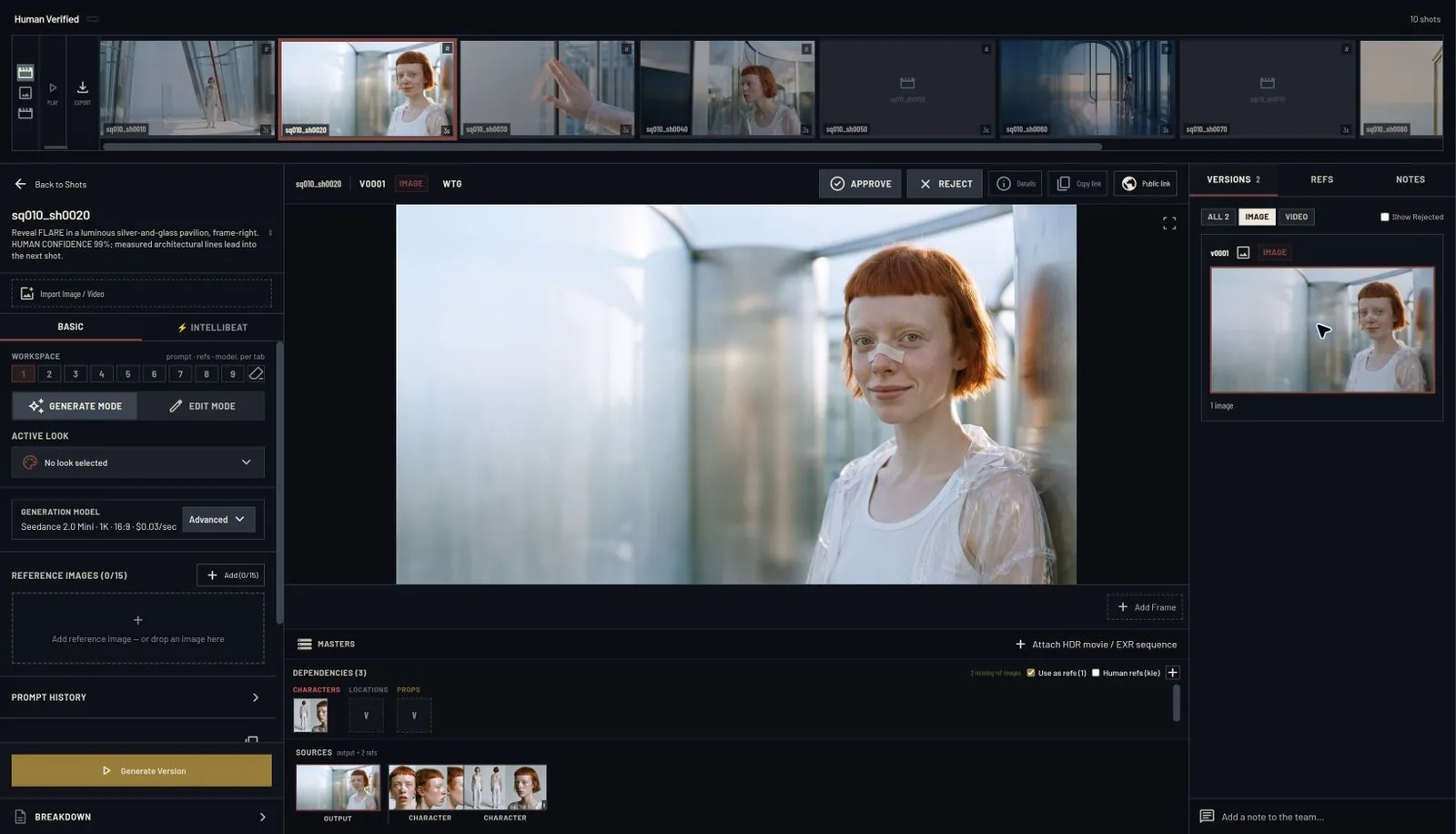
Intellistory held the project, the character references, the takes and the review versions, so a note stayed with the shot it was about.
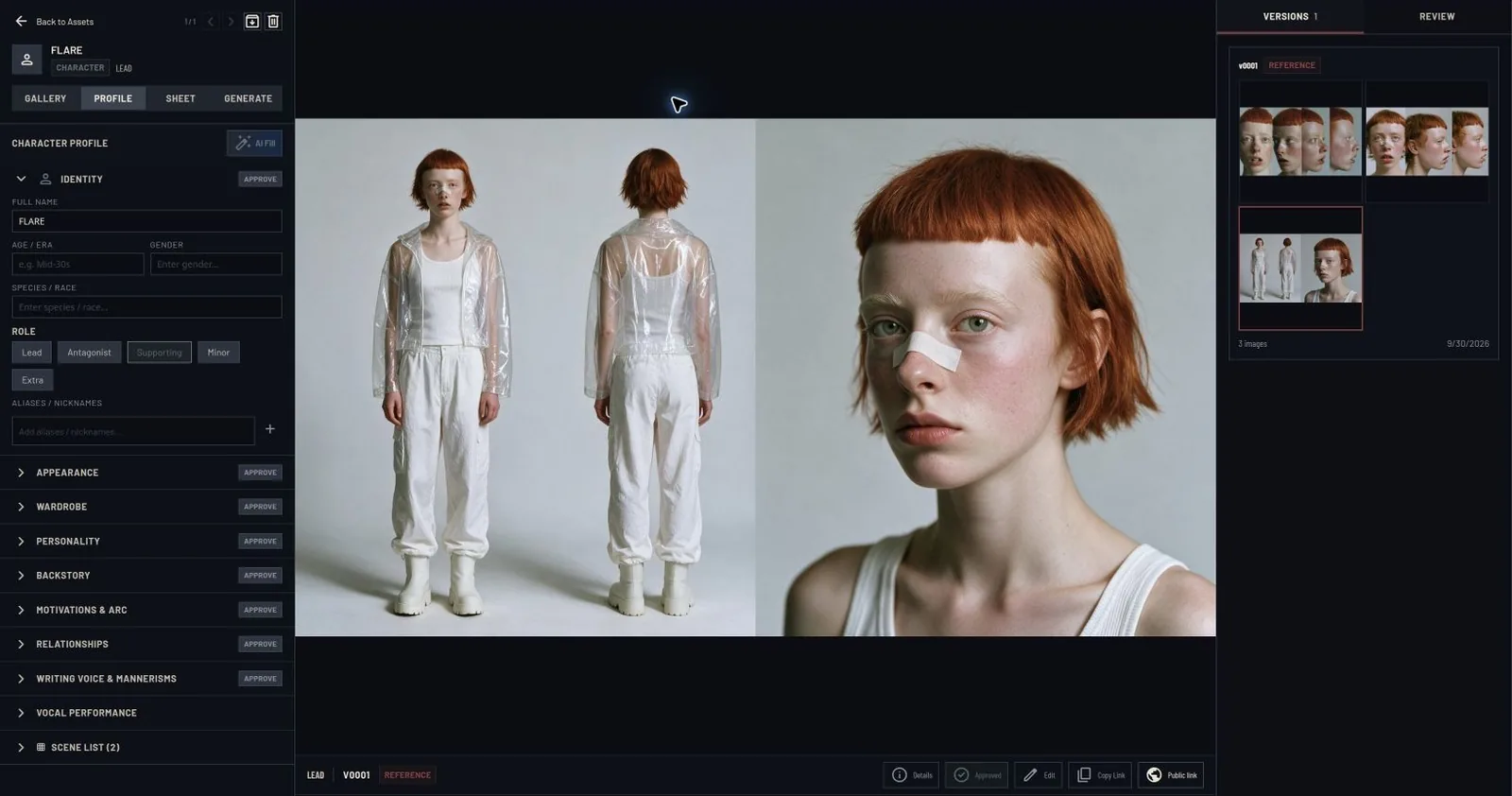
The full-body views describe the silhouette and the wardrobe. The closer views pin down the face. Those references travel with the production as the framing, the light and the performance change.
Reviewing shots and fixing continuity
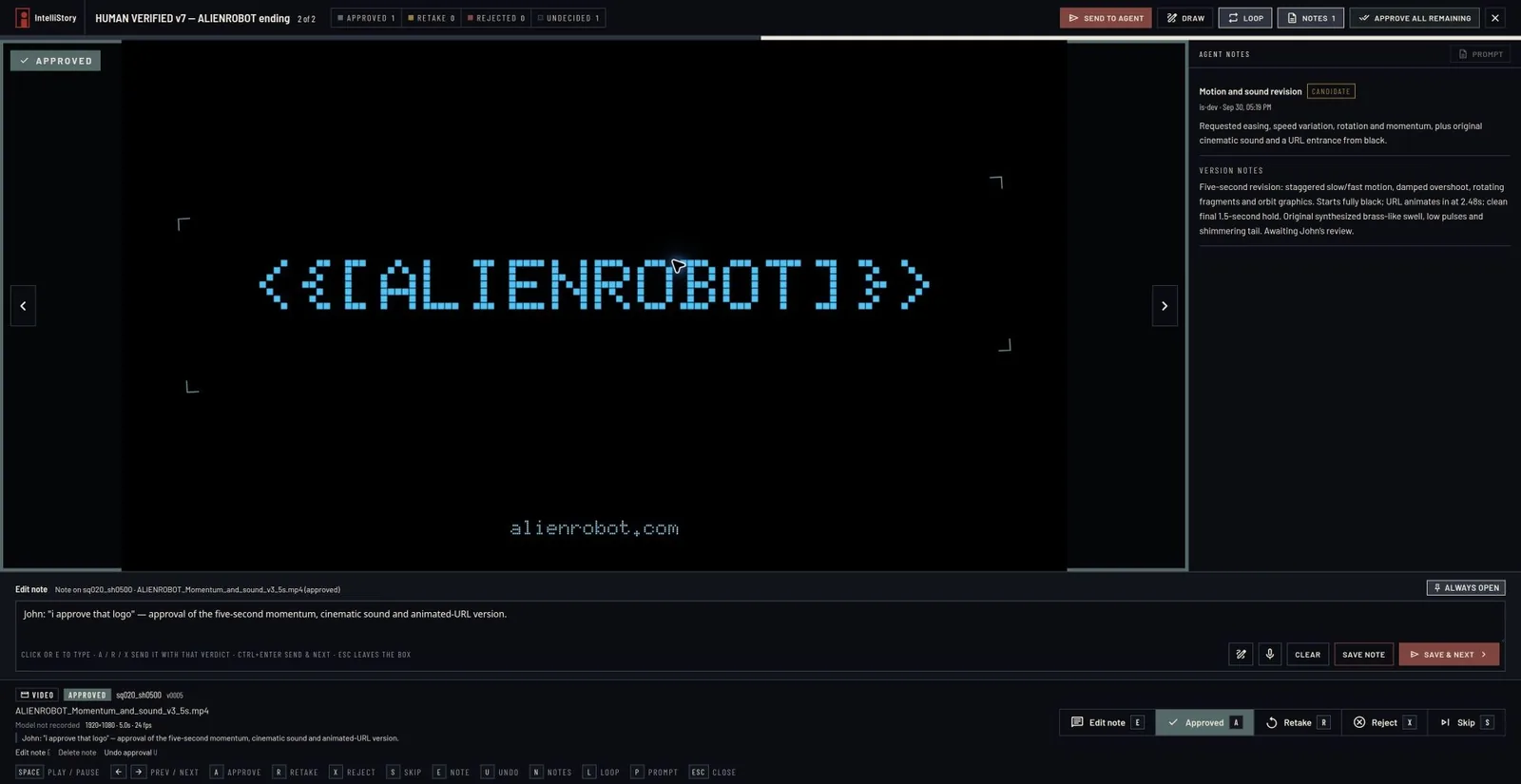
My review process comes from my years as a CG supervisor on animated features and VFX films. When the agents have work to show me, they build a review playlist and open it in my browser. I watch and give voice notes, approving shots, rejecting takes or asking for specific changes. The agents work out the verdict from what I say and record it, so I don't stop to click anything.
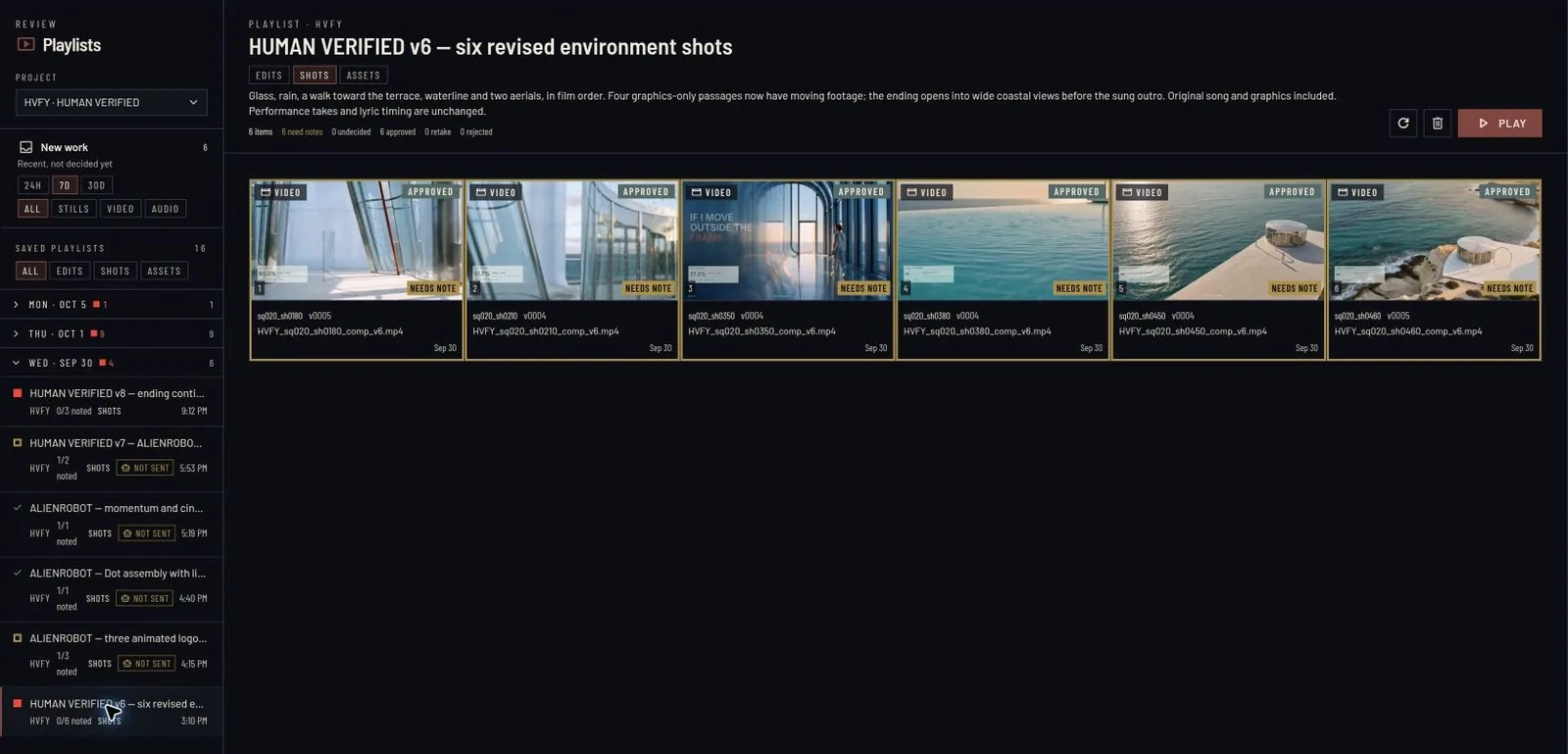
The revisions were specific. Sung passages needed the mouth to match the vocal. Wide shots had to establish the coastal setting. Neighboring aerials had to read as one continuous flight. Each of those meant watching the sequence in motion and deciding what the audience would see.
Character references kept FLARE recognizable, but the environments needed their own attention. Two images with the same mood don't have the same architecture or geography. This film made that very practical.
Where each word goes
The kinetic lyrics are part of the picture. Our software times each word to the song, and the edit decides where the word belongs visually. One rule came out of review: when a line starts just before a cut but is mostly sung in the incoming shot, its text belongs with the incoming shot. Otherwise the viewer sees the start of a sentence flash on an image that's already leaving.
The film engine renders the graphics and text against the song's timeline, so a timing change can be repeated across the full export and each shot review. The final presentation also includes the animated Alienrobot signature and its sound.
What I took from it
I keep complete provenance for the film: the assets, dependencies, prompts, reference inputs, generation settings and outputs behind every shot. As new models arrive, I can ask an agent to re-run a shot or the whole project with one, then review the results against the existing film.
It also gave me three things to carry into FINAL CUT: establish the world first, review neighboring shots together, and keep refining the timing until the graphics support the song. The human work runs through all of it. I chose the takes, judged the continuity, shaped the performance and decided when a shot worked in the cut.