FINAL CUT follows FLARE through one night of filmmaking. She stops waiting for permission, turns on the lights in her bedroom and starts shooting her own music video. I made the film the same way, directing a crew of AI agents through Intellistory, the production tracker I built, with a film engine that handled the edit, the lyrics and the graphics.
The idea
The song is her declaration of independence. The pictures show her building the film she wants, and the graphics show who is helping her: prompts, takes, review decisions and a timeline that keeps moving toward dawn. Her bedroom anchors all of it. Every impossible location in the film is something she makes from that room.
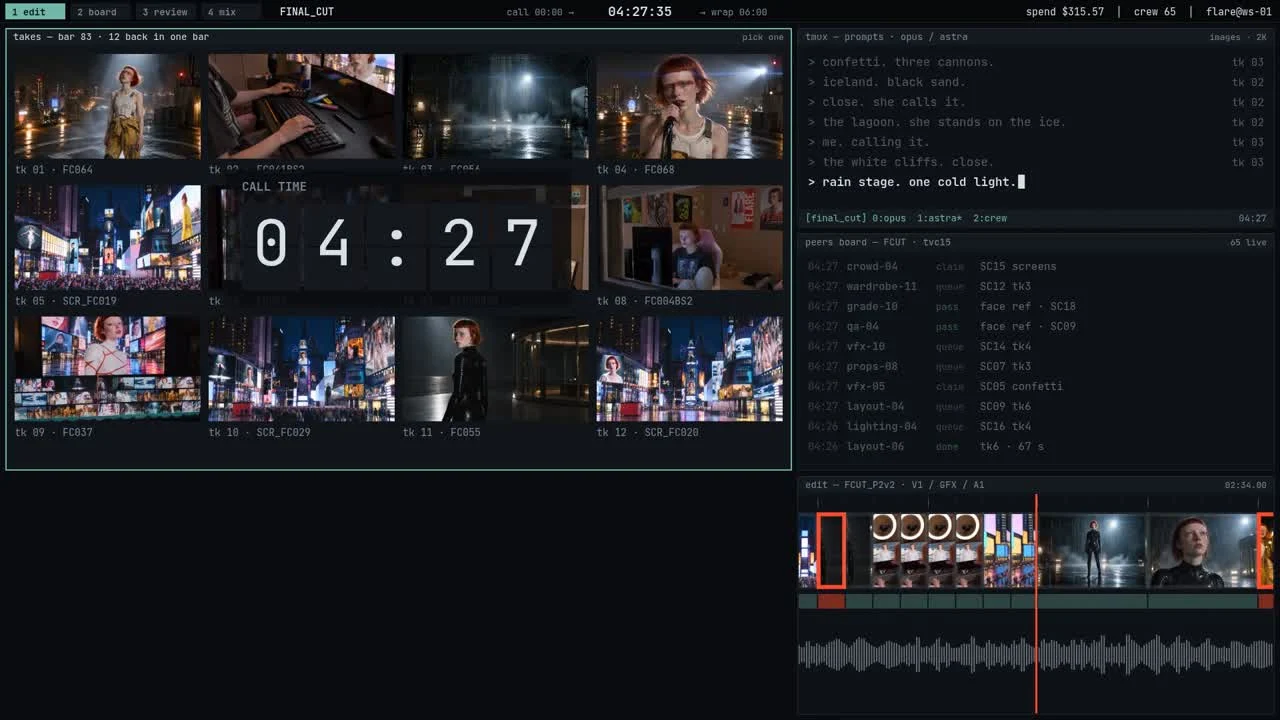
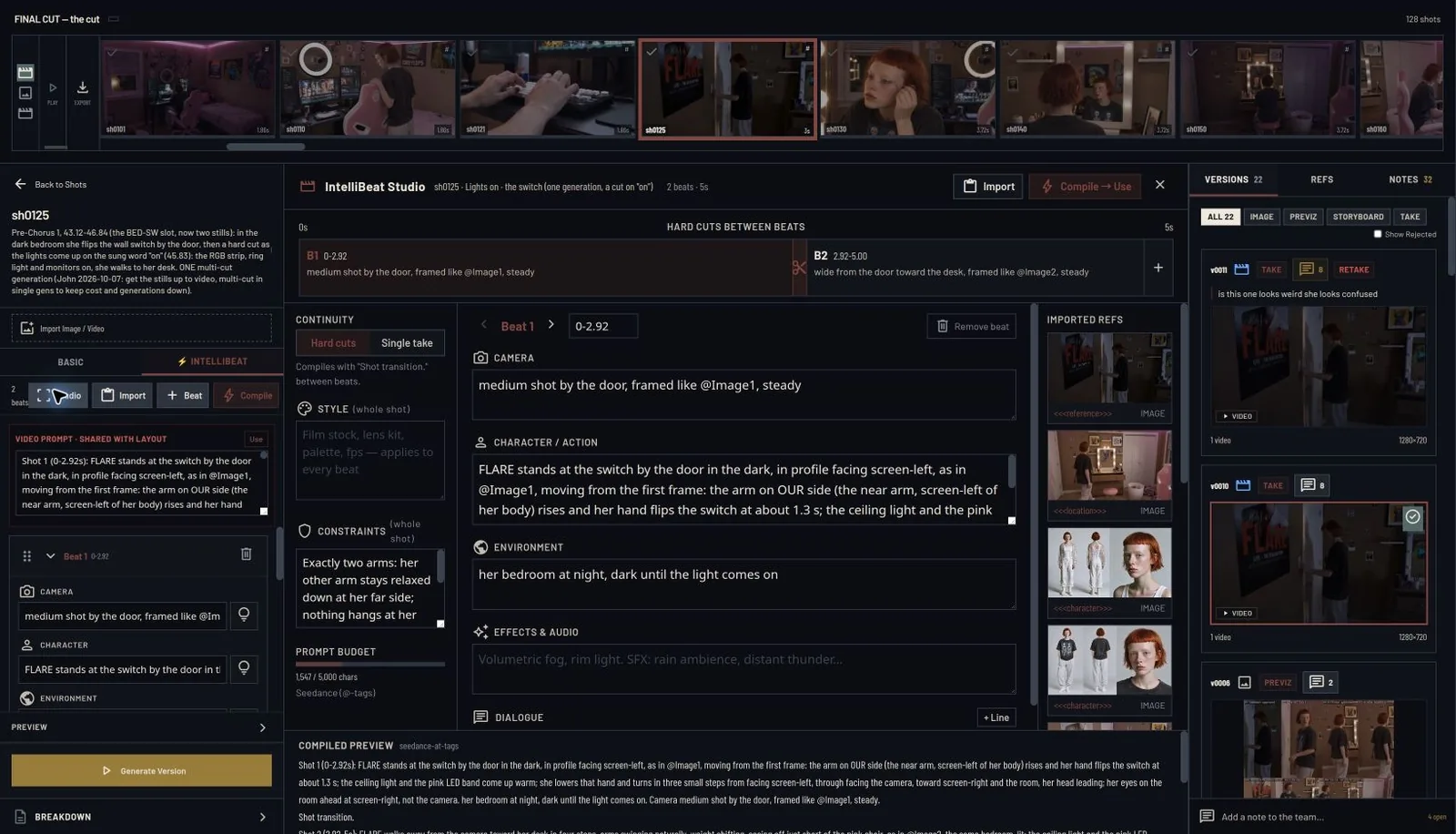
I designed the interface as part of the film. It has dark tiled windows, thin borders, a restrained palette, and lyrics that show up as prompts. It has its own rhythm, and it has to stay readable while it shares the frame with a singer, a cut and a song.
Where the hook came from
I wrote the central line, "I don't need your OK," and picked "your say" to follow it. After that it was notes on the theme, the arrangement and the wording until the generated song became the version in the film.
I also saved the wrap idea for the ending. Repeating it earlier made the story feel finished before it was, and the song had to carry her through the night first.
Animatic first
The film starts as an animatic: still images cut to the song, with Remotion graphics on top. That lets me judge pacing, shot order, lyrics and the crew interface early, before I commit to moving footage for every shot.
Then the stills get replaced by video takes, one at a time, inside the same edit. The song and the graphics give the film its structure, and each shot grows from a held image into a performance. I judge every new take in context, send it back with notes, and watch the next version arrive without rebuilding anything around it.
Developing the character and the room
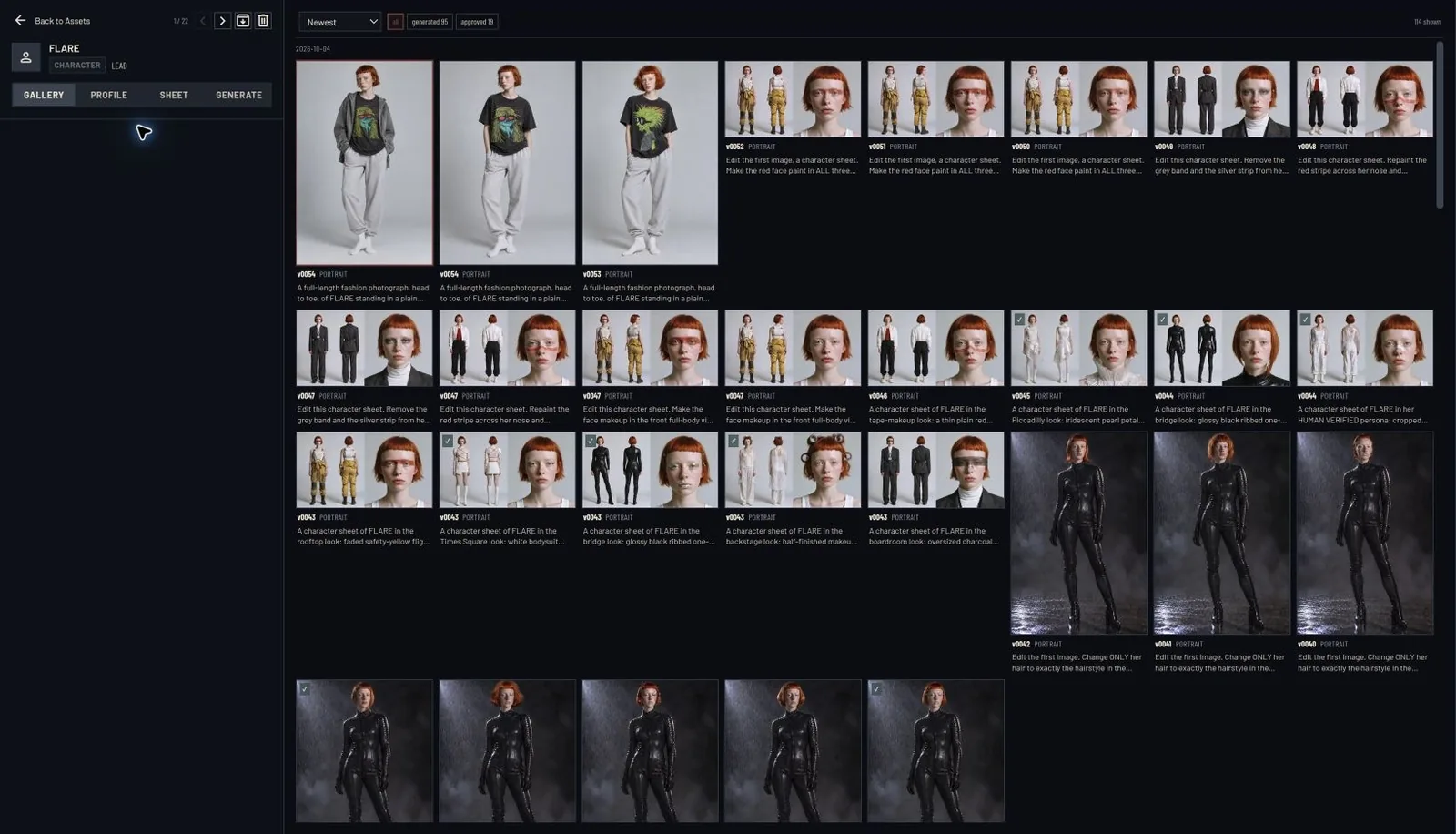
FLARE's look came out of character sheets, wardrobe options and a lot of revisions. Intellistory keeps those versions together, so I can set a new direction next to what came before and keep her recognizable across different looks.
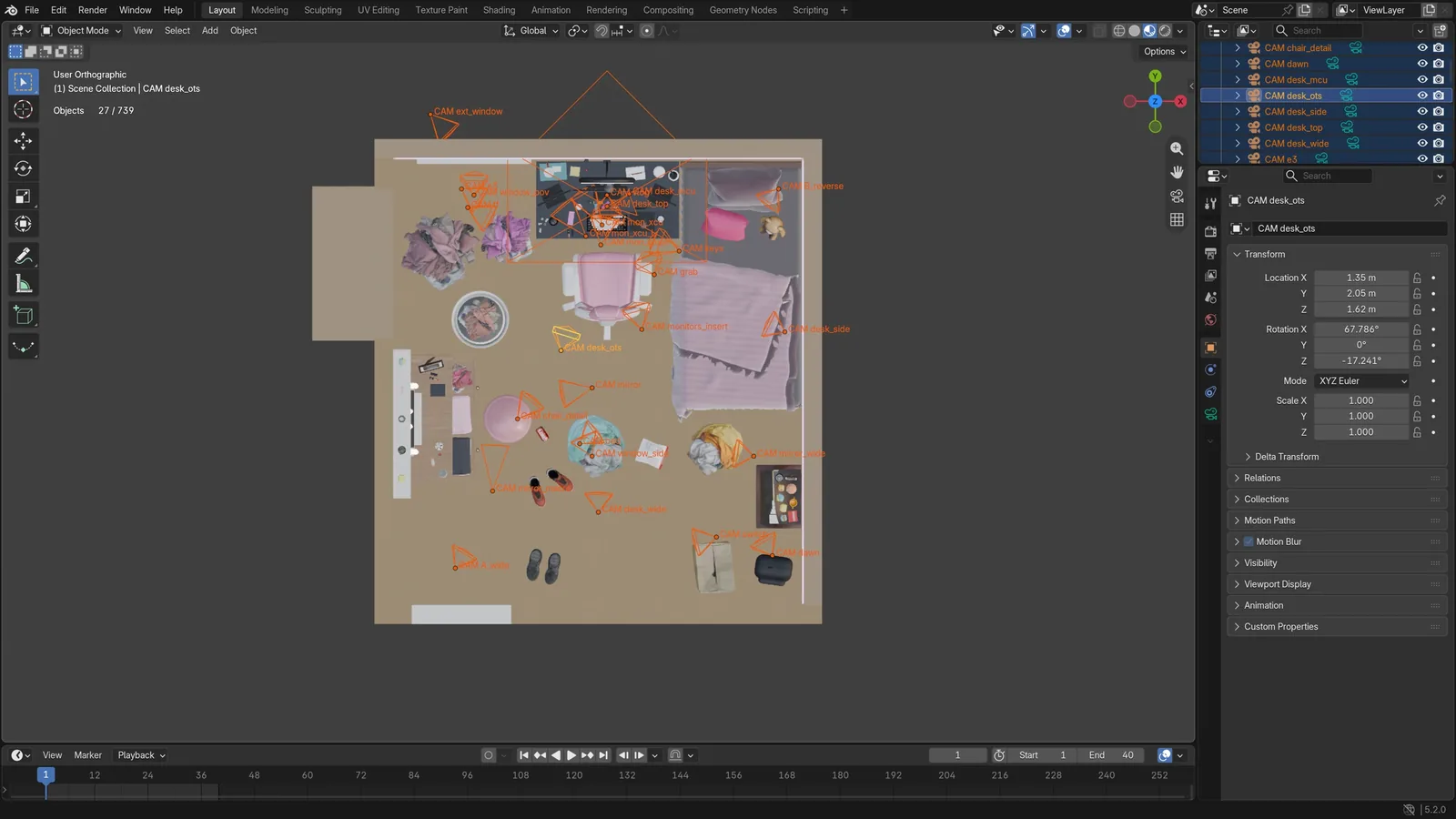
The bedroom got the same treatment. We built the set in Blender and planned cameras around its geography: the door, the desk, the bed and the windows. A shared room with named camera positions gave the crew concrete compositions to work from.
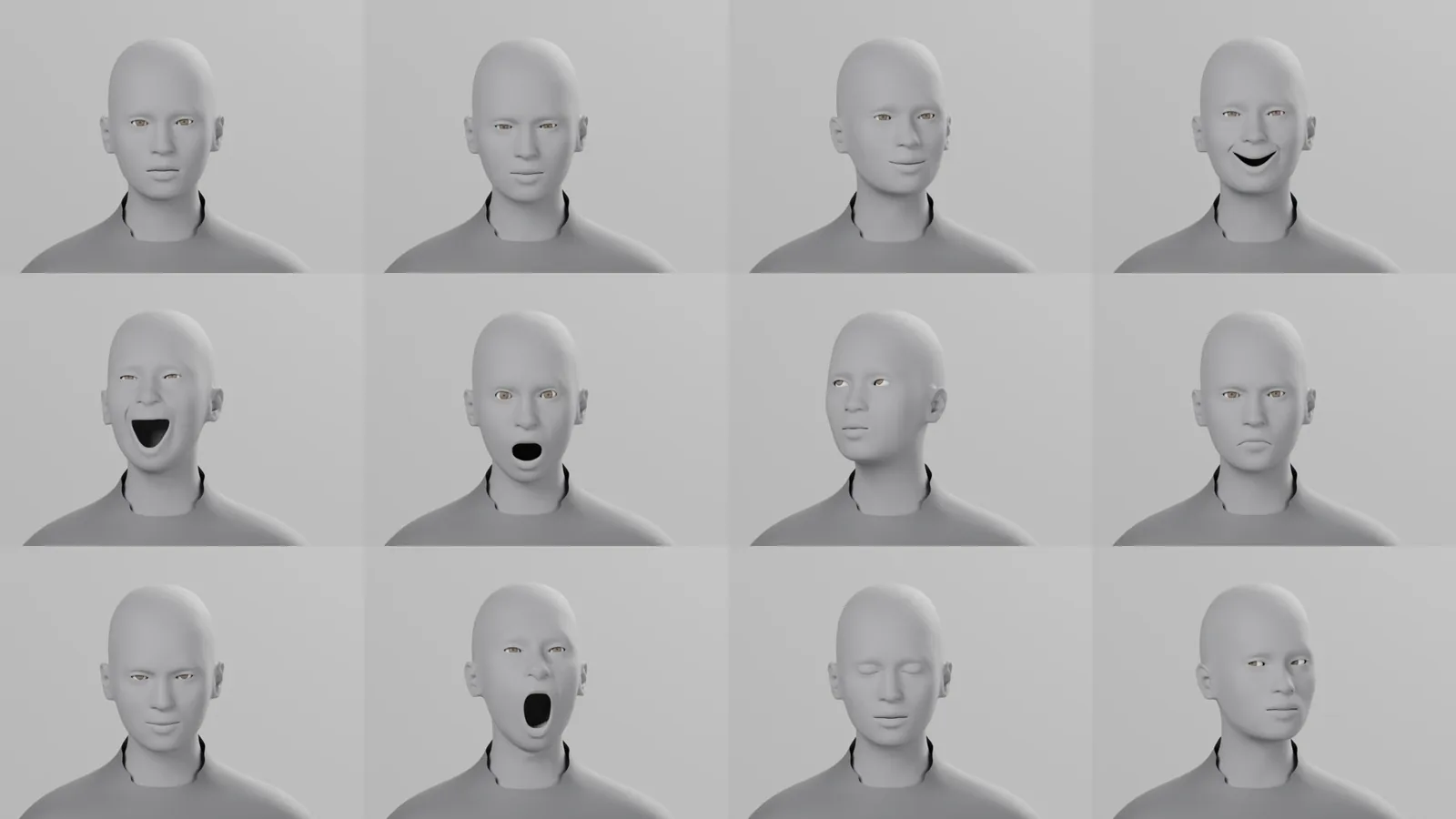
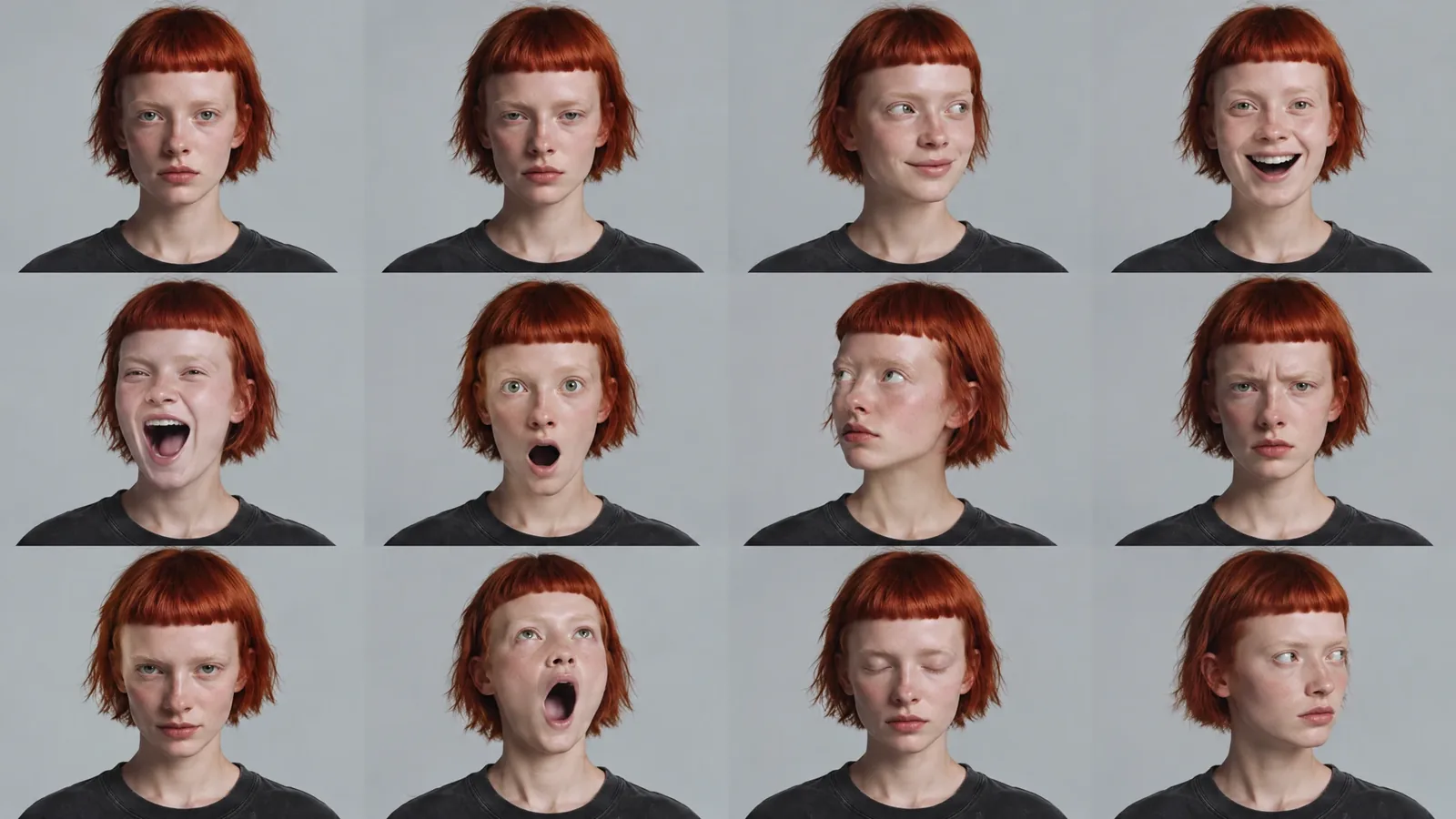
To develop her performance I used a posed CG maquette for expressions. I could review the pose, the eyeline and the mouth shape in a simple form, then see how well that intent survived in a generated FLARE.
Shot direction turns that intent into timed action. For the light-switch sequence, the workspace splits the action into two beats and keeps the camera description, the character's movement, the environment and the reference images together. The versions and notes stay beside the shot as it develops.
Reviewing it like a VFX show
I built this workflow around how a supervisor runs dailies. The crew brings work, I give direction, and the next version comes back with those notes addressed. When the agents have something to show me, they assemble a review playlist and open it in my browser with the shots and versions ready to play. I watch and talk: what works, what needs changing, what gets rejected or sent back for a retake. The notes stay attached to the work, and the agents pick them up for the next pass.
I don't click an approval button. The agents recognize an approval, a rejection or a retake from what I say and record it for me, so I can keep watching the way I would in a review room.
415voice review notes, about 18,100 words
98review playlists
892verdicts: 629 approvals, 247 retakes, 16 rejections
Production snapshot, October 6, 2026. 79 of the approvals were recorded by agents from my stated intent.
Those numbers count decisions across versions and playlists, not unique finished shots, and production kept going after the snapshot. One review batch alone covered 101 takes and about 8,300 words of notes.
The notes that worked best described something you could see. The figure is too big for the doors. The room has changed. The transformation has to land on the beat. A note like that gives the next pass something specific to fix. A consistent face reference didn't settle everything either: body proportions, room layout, camera scale and the relationship between neighboring shots each needed their own attention.
Provenance and the next model
Every result keeps its history: the assets and dependencies behind it, the prompts, the reference inputs, the generation settings and the outputs. That record is what lets me ask an agent to re-run a shot, a sequence or the whole film with a newer model, using the recorded inputs, and then review the new results the same way I reviewed the old ones.
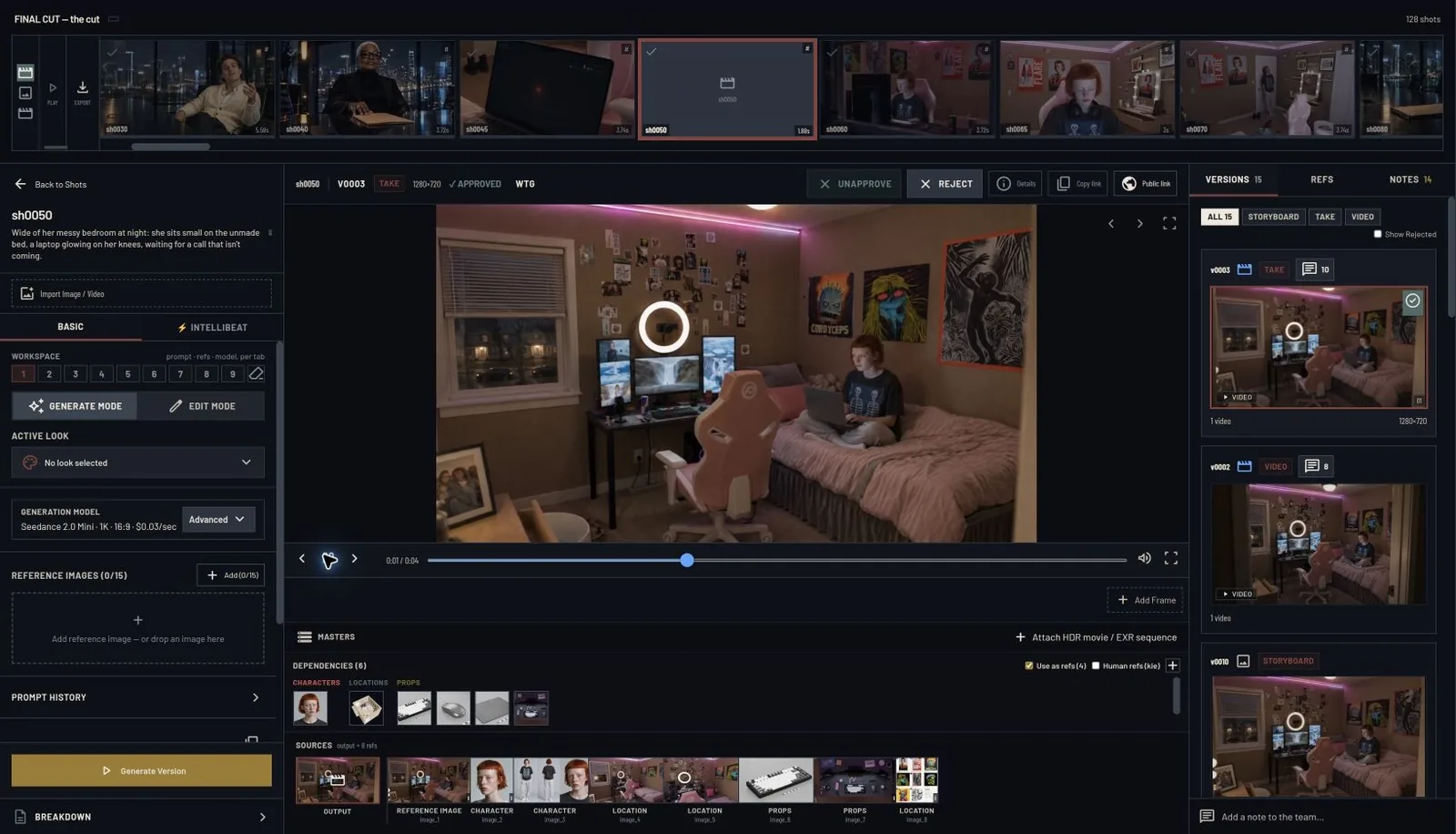
The finished film runs about three minutes fifty seconds, and I still judge the performance, the graphics and the edit together, in motion, with the song playing. The story is about FLARE taking control of the work. Making it meant doing the same.